
Solutions

Industries
Solutions

Industries

Mobile Edge Computing with Cincoze DI-1200

Neteon
January 6, 2027
Press Release

Deployment Takeaway
Moving an industrial computer onto a vehicle changes the selection process. Mounting space, power behavior, vibration, and temperature become part of the computing requirement.
A published Cincoze application story illustrates these constraints through an Asia-Pacific provider of counter-drone systems. This article focuses on the industrial computer’s installation and environmental requirements.
Application Snapshot
Customer: An Asia-Pacific technology provider, unnamed in the source.
Application: Computing within a mobile counter-drone system.
Computer: Cincoze DI-1200 rugged embedded computer.
Selection concerns: Limited mounting space, varied power sources, and demanding operating conditions.
Why a Mobile Platform Changes the Hardware Review
According to Cincoze, the provider integrated the DI-1200 into its system for use on mobile platforms. The source discusses military vehicles and surface craft, where the computer must fit within the platform and tolerate changing environmental conditions.
The broader hardware lesson applies to mobile industrial equipment: processor performance is one requirement among several. A computer also has to be installable, powered appropriately, and suitable for its operating environment.
Where the DI-1200 Fits
Cincoze lists a 203 × 142 × 66.8 mm enclosure, a 12th Gen Intel Core U-series processor, and 9–48 VDC input. For temperature planning, the manufacturer’s current detailed product specification lists -20 to 70°C with extended-temperature peripherals and ambient airflow. Confirm the operating limits of the complete configured system before deployment.
The manufacturer lists shock and vibration testing to MIL-STD-810H and E-mark certification for the DI-1200. These describe the computer’s stated qualifications; they do not establish certification or performance of the complete customer system.
Configuration Details Still Matter
GNSS requires a compatible expansion module, and power ignition sensing is provided through an optional CFM module. The application story also discusses delayed shutdown. Confirm the required modules, settings, and shutdown behavior for the configuration you intend to deploy.
For a general mobile installation, document the available mounting envelope, the platform’s power requirements, and the required shutdown behavior. Check those requirements against the exact computer configuration and its installation documentation.
Operating limits should also be reviewed for the assembled system. The computer’s published range alone does not establish the limits of its storage devices, expansion modules, cabling, or enclosure installation.
What the Source Supports
Cincoze identifies the DI-1200 as the computer selected for the application and explains the associated space, power, and ruggedness requirements. It does not provide measured system availability, field failure rates, or a quantified improvement in detection performance.
For industrial buyers, the useful takeaway is a selection process: review the platform and its environment alongside the computing workload, then verify the complete configuration before deployment.
Review Your Mobile Computing Requirements
Start with the installation space, platform power, environmental conditions, and interfaces your application needs. Use those requirements to review the available DI-1200 configurations.
Explore the DI-1200 Series at Neteon, or contact Neteon about your mobile industrial computing requirements.
Based on Cincoze’s manufacturer application story, published June 26, 2025. The source does not identify Neteon as the integrator. Application imagery courtesy of Cincoze.
Recommended Products
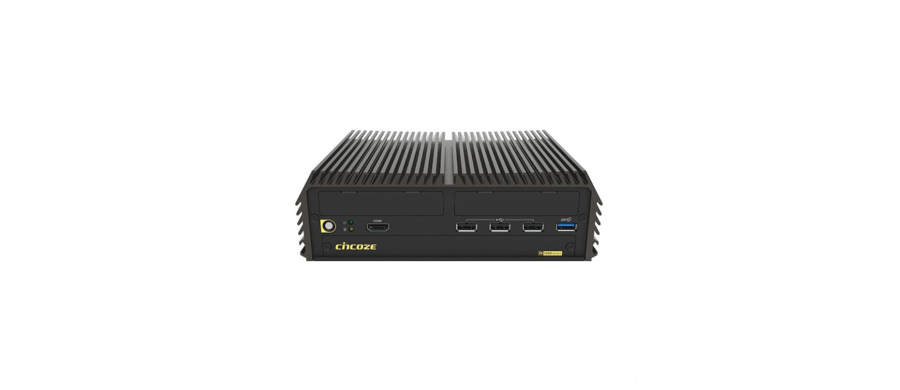
DI-1200-i7-R10
Compact modular rugged computer with a 12th Gen Intel Core i7-1265UE processor.
→View product info
DI-1200-i5-R10
Compact modular rugged computer with a 12th Gen Intel Core i5-1245UE processor.
→View product info
DI-1200-i3-R10
Compact modular rugged computer with a 12th Gen Intel Core i3-1215UE processor.
→View product info

→View product info
→View product info
→View product info


Industrial IoT
We help you enable IIoT connectivity for operational efficiency and maximum business profits.
Knowledge Hub

Start your journey with Neteon!
Discover how our solutions can transform your business.
One click is all it takes.


Follow Us



Copyright © 2025 Neteon Technologies, Inc. All rights reserved.