

Solutions

Industries
Solutions

Industries

Overcoming the Physical Barriers of High-TDP Inference

Neteon
January 16, 2026
Press Release

The Engineering Reality: Silicon vs. Physics
The premise is simple: In the datacenter, AI is a software problem. At the edge, it is strictly a physics problem.
The transition from a controlled server room to a factory floor or an autonomous vehicle introduces a hostile gap that standard Industrial PCs (IPCs) cannot bridge. When you integrate a high-wattage accelerator (like an NVIDIA RTX or L4) into a sealed enclosure, you are effectively creating a thermal runaway chamber—unless you fundamentally alter the system architecture.
This brief analyzes the three specific failure modes that occur when datacenter compute meets the real world, and the architectural changes required to survive them.
1. The Thermal Trap: Solving the "Oven Effect"
The most immediate enemy is heat density. A CPU might generate 35W, but an AI inference card can easily output 75W to 250W. In a standard IPC, these components share a thermal chamber.
The Narrative of Failure:When you seal a high-TDP GPU inside a fanless box to protect it from dust, the internal air temperature rises rapidly. Without active airflow, the heat saturates the chassis faster than the external fins can dissipate it. The result is Thermal Throttling: the GPU downclocks to protect itself, destroying the real-time latency determinism required for autonomy.
The Architectural Fix: Segregated Conduction Cooling
The solution is not just "more fins"—it is thermal segregation. Neousys engineers decoupled the thermal zones.
- Mechanism: Utilizing a dedicated heat-pipe bridge, the thermal load from the GPU is transferred directly to a specific section of the external chassis wall, mechanically isolated from the CPU's thermal zone.
- Result: This ensures that the massive heat flux from the AI core does not saturate the CPU, allowing both to run at max frequency even at $60^\circ\text{C}$ ambient.
2. The Vibration Variable: Mass x Acceleration
In a server rack, gravity is static. In an autonomous vehicle or AGV, gravity is dynamic. A modern GPU is a dense block of copper and silicon with significant mass.
The Narrative of Failure: As a vehicle hits a bump (shock) or runs a diesel engine (vibration), that heavy GPU creates a pendulum effect on the PCIe slot. Standard retention screws cannot stop the micro-movements. Over time, this leads to Fretting Corrosion on the gold finger contacts or, in extreme cases, the card physically "backing out" of the slot, causing an instant system halt.
The Architectural Fix: Patented Damping Cassette Module
To counter this, the chassis must act as an exoskeleton. Neousys implemented a patented Damping Cassette Module.
- Mechanism: This design does not rely on the PCIe slot for mechanical support. Instead, an adjustable damping bracket compresses the card from the top and side, effectively fusing the GPU to the chassis.
- Result: This distributes the shock load across the entire aluminum frame rather than the fragile PCB, achieving MIL-STD-810G compliance.
3. The "Dirty Power" Struggle
The final barrier is invisible: electrical instability.
The Narrative of Failure:Deep learning inference is "bursty"; power draw spikes instantly when the model runs. If this coincides with a voltage sag on the vehicle bus (e.g., during engine cranking, where 24V can drop to 6V), the system faces a brownout. Standard power supplies interpret this as a fault and reset, corrupting the file system.
The Architectural Fix: Wide-Range DC & Ignition Control
The system requires a Wide-Range DC Input (8V–48V) coupled with Intelligent Ignition Control.
- Mechanism: An integrated MCU acts as a gatekeeper. It isolates the sensitive internal components from external transients and manages the on/off logic.
- Result: The system only boots when voltage is stable and performs a graceful software shutdown after the ignition is cut, protecting the OS integrity.
Recommended Products
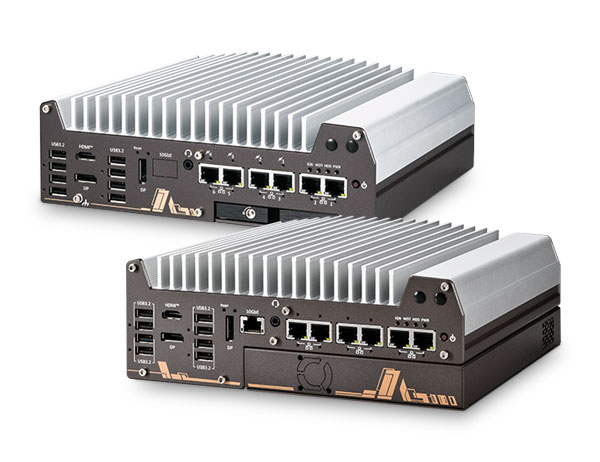
NUVO-11000 Series
Intel® Core™ Ultra 200S Series Fanless Embedded Computer with 2.5GbE/ GbE, USB 3.2, 8-CH DIO, optional 10GbE and Expansion Cassette & MezIO® Interface
→View product info

NUVO-11531 Series
Intel® Core™ Ultra 200S Compact Fanless Computer with 4x PoE+ 2.5GbE, 4x USB 3.2, 1x Easy-Swappable 2.5” SSD Tray, and 1x External SlimSAS Connector
→View product info
.jpg)
POC-700 Series
Intel® Core™ i3-N305/ Atom® x7425E Ultra-compact Embedded Computer with 4x PoE+, USB 3.2, and MezIO® Interface
→View product info
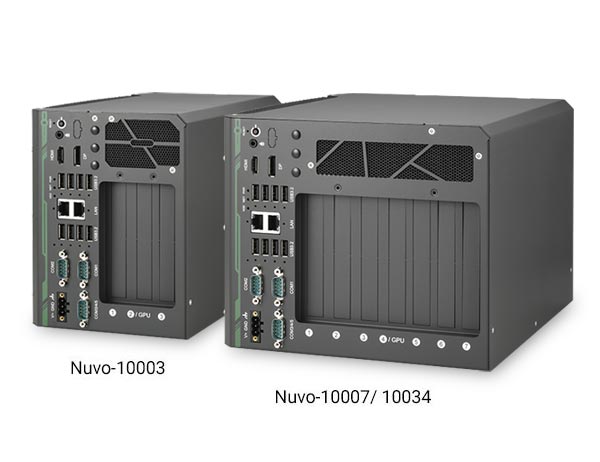
NUVO-10000 Series
Intel® 14th/ 13th/ 12th-Gen Core™ i9/ i7/ i5/ i3 Expansion Box-PC with up to 7 PCIe/ PCI Slots
→View product info
__53190.jpg)
→View product info
→View product info
.png)

Industrial IoT
We help you enable IIoT connectivity for operational efficiency and maximum business profits.
Knowledge Hub

Start your journey with Neteon!
Discover how our solutions can transform your business.
One click is all it takes.


Follow Us



Copyright © 2025 Neteon Technologies, Inc. All rights reserved.