
__53190.jpg)

Solutions

Industries
Solutions

Industries

Edge AI for Autonomous Mobile Robots in Factory Logistics

Neteon
September 4, 2026
Press Release

Deployment Takeaway
An autonomous mobile robot with machine vision and a robotic arm needs more than navigation hardware. Its edge computer must process sensor data, run AI inference, coordinate motion, connect cameras and LiDAR, and remain stable inside a compact platform exposed to heat and vibration.
Application Snapshot
Application: Autonomous mobile robots for material transport, machine-vision picking, and unloading inside factories.
Customer profile: European robot manufacturer.
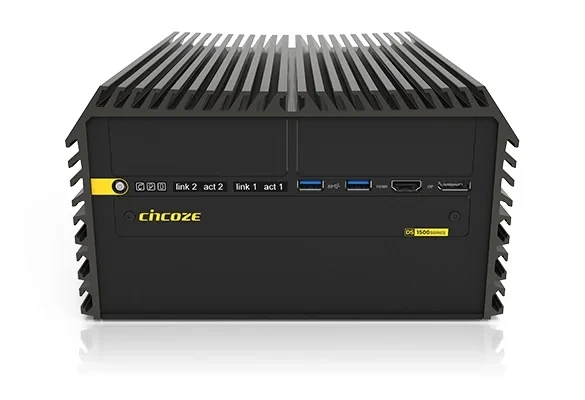
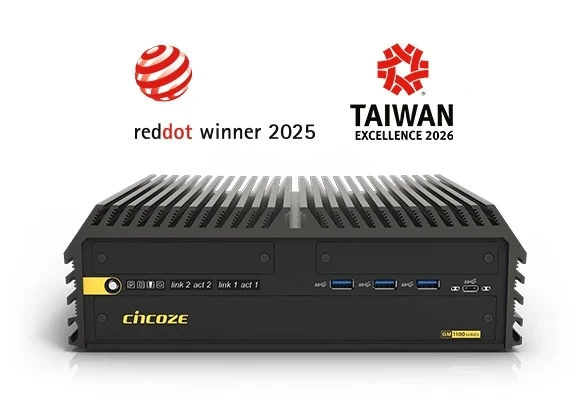
Original deployed platform: Cincoze DS-1202 rugged embedded computer with an NVIDIA GeForce GTX 1050 Ti GPU.
Core workflow: Perceive the environment, identify objects, plan movement, control the robotic arm, and transport materials autonomously.
Deployment needs: GPU expansion, industrial camera and sensor connectivity, motion-control integration, thermal management, and resistance to shock and vibration.
Bringing Vision, Movement, and Material Handling Together
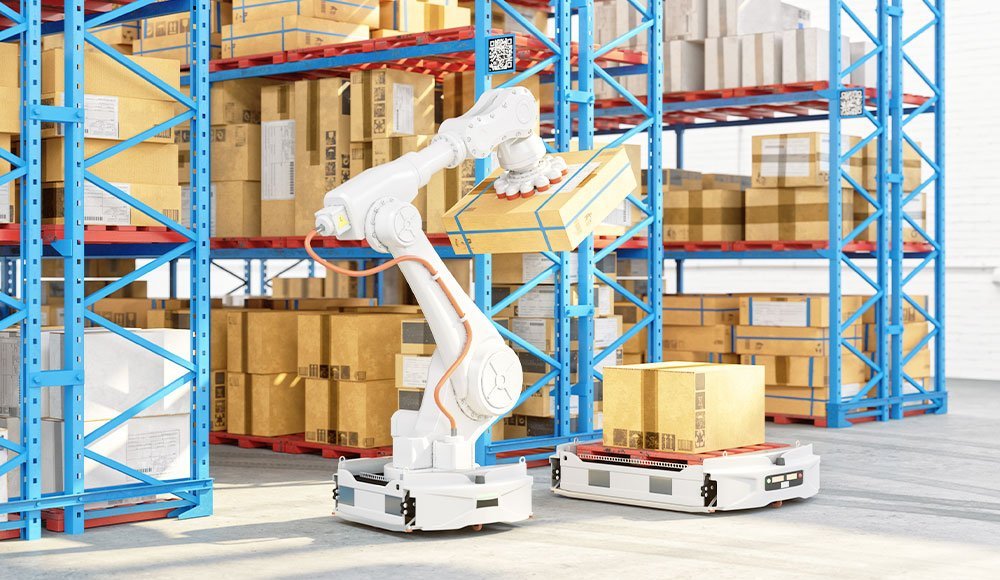
Factory intralogistics involves more than moving material from one point to another. An autonomous mobile robot may also need to recognize an object, approach it safely, pick it up with a robotic arm, avoid people and equipment, and deliver the load to the correct station.
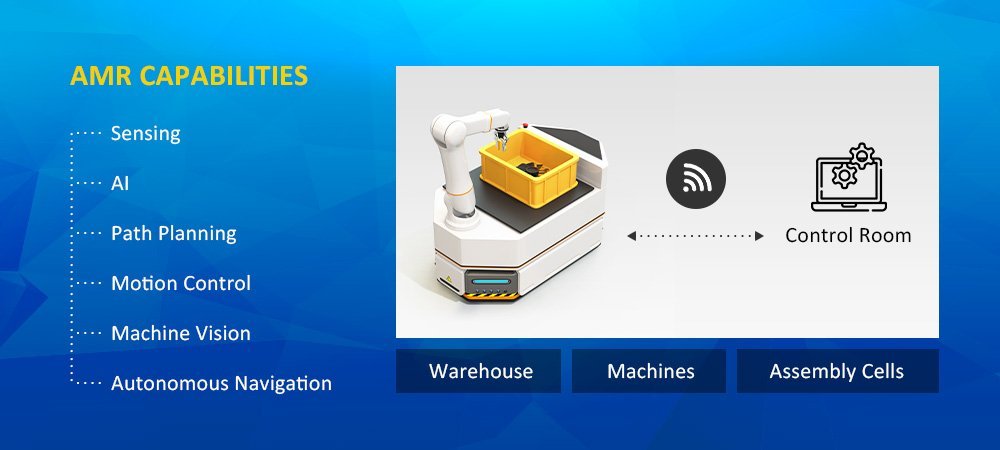
That workflow brings several computing tasks onto one mobile platform. Industrial cameras and LiDAR provide information about objects and the surrounding environment. AI inference helps the robot identify what it sees. Navigation and motion-control systems translate those inputs into movement, while the robotic arm handles picking and unloading.
For this deployment, a European robot manufacturer used the Cincoze DS-1202 as the AMR's computing and control core. The system paired the rugged embedded computer with an NVIDIA GeForce GTX 1050 Ti GPU to support machine vision and AI processing inside the robot.
What the AMR System Needed
1. Local GPU computing for perception and AI inference
The robot needed to process visual and sensor data close to the application. CPU performance handled the broader computing and control workload, while the added GPU provided the parallel processing required for machine-vision analysis and AI inference.
PCIe expansion was therefore a core design requirement. It allowed the robot manufacturer to add the selected GPU and run the vision workload within the AMR's embedded computing system.
2. Connections for cameras, LiDAR, and motion-control devices
An AMR depends on several data sources and control interfaces working together. Industrial cameras help identify and locate objects. LiDAR and other sensors support environmental awareness and navigation. Motors, controllers, and robotic-arm components carry out movement and material-handling commands.
The computing platform needed enough USB, COM, LAN, and expansion capacity to connect those devices and keep data moving through the system.
3. Reliable operation inside a compact mobile system
Installing a GPU computer inside an AMR creates practical mechanical and thermal constraints. The enclosure has limited space, the processor and GPU generate heat, and the complete system is exposed to vibration as the robot travels across the factory floor.
The selected computer therefore needed a rugged structure, effective heat dissipation, wide-range DC input, and environmental tolerance for long operating cycles in an industrial setting.
How Edge AI Supports the Robot Workflow
The embedded computer serves as the point where perception and physical action come together:
- Sense: Cameras, LiDAR, and other sensors collect information about the load, route, and surrounding workspace.
- Interpret: CPU and GPU resources process the incoming data and run the vision and AI workloads needed to identify objects and understand the environment.
- Act: The control system sends instructions to the drive system, motors, and robotic arm for movement, picking, transport, and unloading.
- Connect: Industrial and wireless interfaces support communication with peripherals, management systems, and the broader factory network when required.
Why the Cincoze DS-1202 Fit the Original Deployment
The DS-1202 combined computing performance, card expansion, industrial I/O, and rugged construction in one embedded platform.
- CPU and GPU capability: Support for 9th and 8th generation Intel Core processors and two PCI/PCIe expansion slots allowed the original system to combine the main computing workload with a discrete GPU.
- Flexible peripheral integration: Native LAN, USB, COM, display, and Mini PCIe interfaces supported connections for cameras, sensors, control components, storage, and wireless communication options.
- Modular I/O expansion: Cincoze CMI and CFM modules could add interfaces and functions such as GbE LAN, PoE, M12, COM, DIO, and ignition sensing when a project required them.
- Industrial power and environmental support: The platform supported 9–48 VDC input and an operating temperature range of -40°C to 70°C, subject to configuration and airflow conditions.
- Resistance to movement and vibration: Fanless, cableless construction and the platform's shock and vibration specifications supported installation in a mobile industrial system.
Resulting Value
The completed AMR could move materials autonomously while using machine vision and a robotic arm for picking and unloading. Instead of treating navigation, visual recognition, and robotic manipulation as separate systems, the deployment brought their computing and control requirements together on one rugged edge platform.
For manufacturers evaluating AMRs, the broader lesson is practical: selecting the robot's computer requires a system-level review. AI performance matters, but so do camera bandwidth, sensor interfaces, motion-control compatibility, wireless connectivity, power budget, mechanical size, thermal design, and vibration resistance.
How Neteon Supports Robotics and Edge AI Projects
Neteon helps robotics, machine vision, and automation teams move from product selection to deployment faster. We can help compare CPU, GPU, and NPU options; confirm camera and sensor interfaces; review wireless, power, thermal, and environmental requirements; and configure a project-ready industrial computer around the application.
Planning an AMR, robotic vision, or industrial edge AI deployment? Contact Neteon for project support, or browse Cincoze products available from Neteon.
.png)

Industrial IoT
We help you enable IIoT connectivity for operational efficiency and maximum business profits.
Knowledge Hub

Start your journey with Neteon!
Discover how our solutions can transform your business.
One click is all it takes.


Follow Us



Copyright © 2025 Neteon Technologies, Inc. All rights reserved.