
Solutions

Industries
Solutions

Industries

Machine Vision at Production Speed

Neteon
August 1, 2026
Press Release
Deployment Takeaway
In machine vision, the embedded computer is not just a control box. It has to process image data quickly, connect cleanly to cameras and automation devices, and keep running reliably in production environments.
Application Snapshot
Application: AI-assisted machine vision for inspection, recognition, measurement, and automated handling.
Customer profile: Leading European machine vision equipment manufacturer.
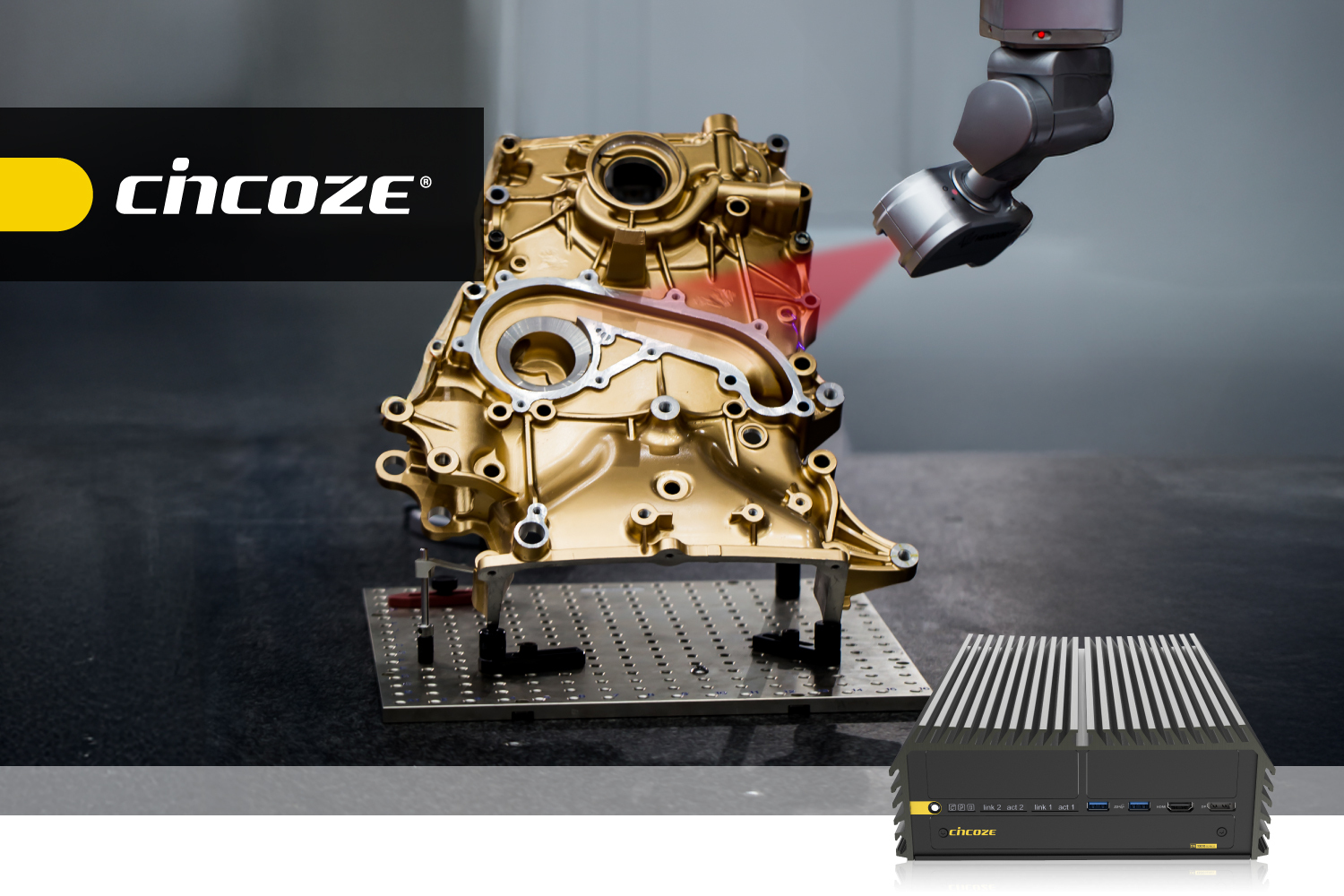
Industrial computer: Cincoze DS-1300 embedded computer.
Core requirement: Real-time processing for large camera and 2D/3D profile sensor streams.
Deployment needs: High-speed I/O, modular expansion, peripheral connectivity, and stable 24/7 operation.
Deployment Context
Machine vision brings cameras, optics, sensors, and image processing together so industrial systems can inspect, recognize, measure, and respond with greater consistency. When AI is added to the workflow, the system can support more advanced tasks such as defect detection, object recognition, and decision-making at the edge.
For production teams, the challenge is not only capturing good images. The system also needs enough computing performance to analyze high-volume image data in real time, enough connectivity to coordinate with automation devices, and enough ruggedness to operate continuously on or near the production line.
In this case, a European machine vision equipment manufacturer selected the Cincoze DS-1300 embedded computer as the core computing platform across several machine vision systems. The goal was to support faster inspection and recognition while maintaining the reliability needed for industrial deployment.
What the System Needed
1. Real-time image processing
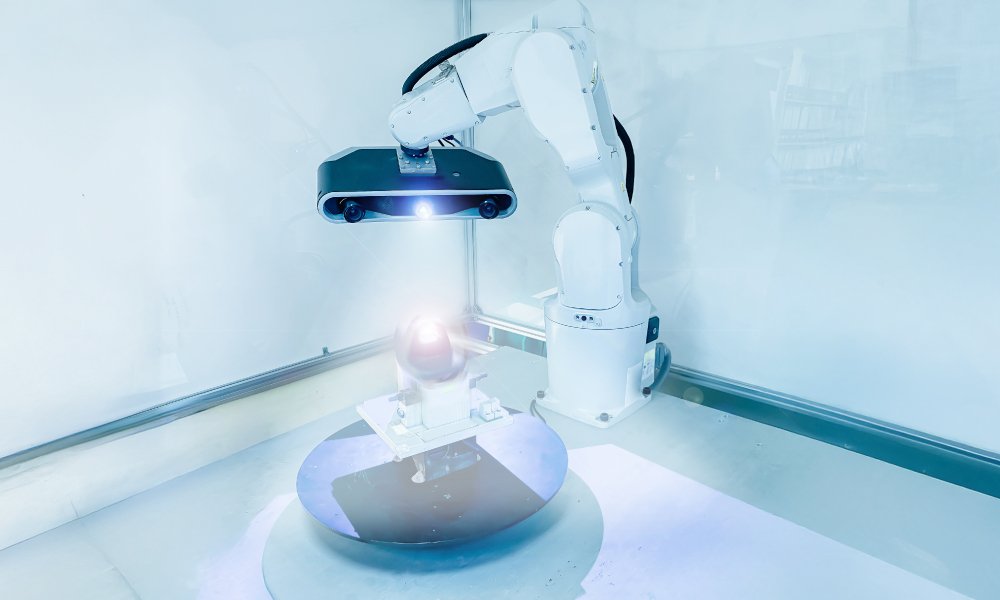
The embedded computer needed to analyze large volumes of data from cameras and 2D/3D profile sensors without slowing the inspection process. That processing capacity is critical for identifying object position, shape, size, and defects with the precision required in automated inspection.
2. Flexible peripheral and control connectivity
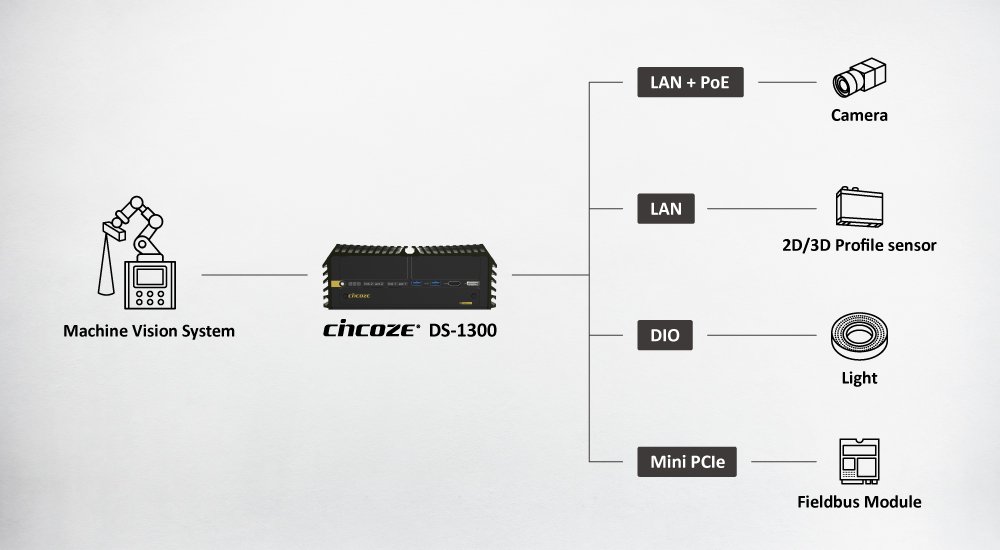
Machine vision systems rarely operate alone. They need to connect with cameras, profile sensors, light sources, displays, and downstream control devices. In many deployments, the system also has to trigger or guide robotic arms for sorting, adjustment, or handling based on inspection results.
3. Reliable continuous operation
Because machine vision is tied directly to production speed and quality, downtime can quickly affect throughput. The computer must keep running over long operating periods, including in enclosed cabinets and environments where heat, vibration, and electromagnetic interference are practical concerns.
Why the DS-1300 Fit
The DS-1300 matched the project requirements by combining high-performance processing, high-speed data transfer, modular I/O expansion, and rugged mechanical design in one embedded platform.
- Processing and storage headroom: Intel Xeon/Core processor support, up to 64GB DDR4 memory, and NVMe SSD support through an M.2 Key M slot.
- High-speed data movement: Up to 10GbE LAN and 10Gbps USB 3.2 Gen2x1 for machine vision image and data transmission.
- Configurable industrial I/O: LAN, USB, COM, DIO, and display outputs for cameras, sensors, lighting, and operator displays.
- Control-system expansion: A built-in mini-PCIe slot can support a Fieldbus module for real-time robotic sorting or adjustment.
- Rugged operation: Fanless design, -40°C to 70°C wide-temperature support, 9-48V input, CE/FCC EMC compliance, and MIL-STD-810G shock and vibration resistance.
Resulting Value
With the DS-1300 as the embedded computing platform, the machine vision systems could process camera and sensor data more quickly and coordinate inspection results with connected automation devices. That combination supports faster inspection, more consistent recognition, and a practical path toward lower production costs.
For industrial buyers, the broader lesson is straightforward: successful machine vision deployment depends on the whole edge platform, not only the camera or AI model. Compute, I/O, storage, rugged design, and expansion options all need to match the real production workflow.
How Neteon Supports Similar Projects
Neteon IPC Store helps engineering and operations teams move from product selection to deployment faster. For machine vision, edge AI, robotics, and industrial automation projects, that means helping teams compare IPC options, confirm I/O and expansion requirements, and prepare project-ready industrial computing systems.
Need help choosing the right industrial computer for a machine vision or edge AI project? Contact Neteon at https://www.neteon.net/contact/ or explore IPC solutions at https://ipc.neteon.net/.
Recommended Products
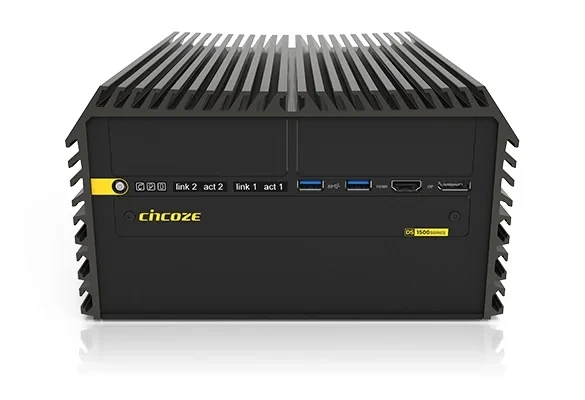
DS-1502-R10
High-performance PCIe-expandable embedded computer for machine vision and edge AI workloads.
→View product info
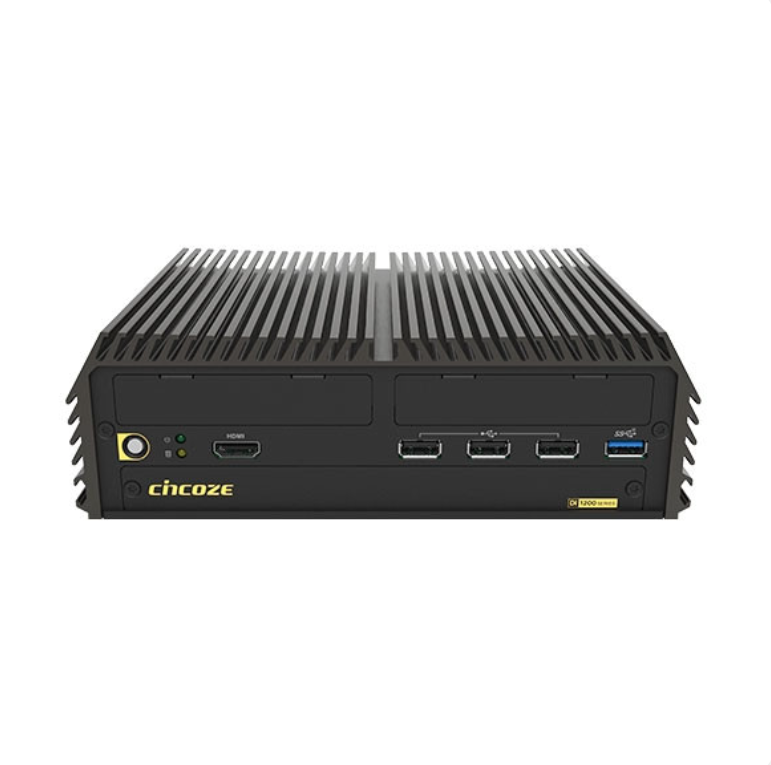
DI-1200 Series
Compact 12th Gen Intel Core rugged computer for space-limited industrial deployments.
→View product info
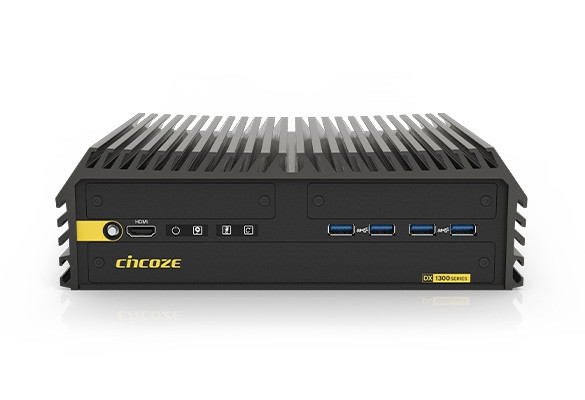
DX-1300-R10
Rugged workstation computer for high-performance industrial vision and edge workloads.
→View product info
__53190.jpg)
→View product info
→View product info
→View product info
Latest from the Knowledge Hub
Learn More
.png)
Industrial IoT
We help you enable IIoT connectivity for operational efficiency and maximum business profits.
Knowledge Hub

Start your journey with Neteon!
Discover how our solutions can transform your business.
One click is all it takes.


Follow Us



Copyright © 2025 Neteon Technologies, Inc. All rights reserved.