
Solutions

Industries
Solutions

Industries

Automating Tarmac Logistics with Rugged Edge AI

Neteon
January 13, 2026
Press Release

The Engineering Challenge: The "Tarmac Torture Test"
Objective: Alleviate driver shortages at major airports (handling 30–100M passengers/year) by deploying autonomous towing vehicles to move luggage between terminals and aircraft.
Standard industrial PCs failed to meet the reliability requirements due to three critical environmental factors on the tarmac:
1. The Vibration Spectrum
Unlike warehouse AGVs on smooth concrete, tarmac vehicles face constant, high-frequency vibration from asphalt textures and sudden shock loads when crossing expansion joints or service grates.
The Failure: Standard PC expansion cards (GPUs/NICs) would vibrate loose from their PCIe slots, causing intermittent sensor loss and vehicle stalling.
2. The Thermal Confines
To maintain aerodynamics and safety, the compute unit had to be buried deep inside the vehicle chassis with minimal airflow.
The Failure: The combination of high ambient tarmac temperatures (often >40°C in summer) and zero airflow led to thermal throttling, crippling the obstacle detection algorithms.
3. The Fleet Synchronization Gap
The vehicles needed more than just autonomy; they needed to act as a synchronized fleet.
The Constraint: The system required robust, low-latency handoffs between WiFi (gate proximity) and private 4G/5G networks (tarmac transit) to receive real-time dispatch orders and upload predictive maintenance telemetry.
The Solution Architecture
The integrator selected the Neousys Nuvo Rugged Series to serve as the central brain. The choice was driven by mechanical engineering, not just compute specs.
- Fixing the Mechanical Failure: The Nuvo series utilizes a patented Damping Bracket and Cassette Module.
- Result: The Cassette design isolates the add-on cards (for AI inference or sensor I/O) from the chassis vibration. This creates a separate thermal and mechanical chamber, ensuring that even under continuous shock, the cards remain seated and cooled.
- Fixing the Thermal Failure:The chassis uses a dedicated heat-pipe design to conduct heat from the CPU/GPU directly to the external fins.
- Result: The system sustains peak performance in confined, zero-airflow spaces without throttling, ensuring the obstacle detection latency remains deterministic.
- Fixing the Connectivity:Integrated expansion slots allowed for dual-mode connectivity (WiFi + Cellular).
- Result: The fleet management system can dynamically schedule vehicles based on real-time flight data, prioritizing loads and distributing wear-and-tear across the fleet.

Technical Snapshot
Implementation Checklist: The "Go/No-Go" Assessment
Before integrating the Neousys Nuvo Rugged Series into your autonomous ground vehicle (AGV) or towing tractor, evaluate these engineering constraints.
Recommended Products
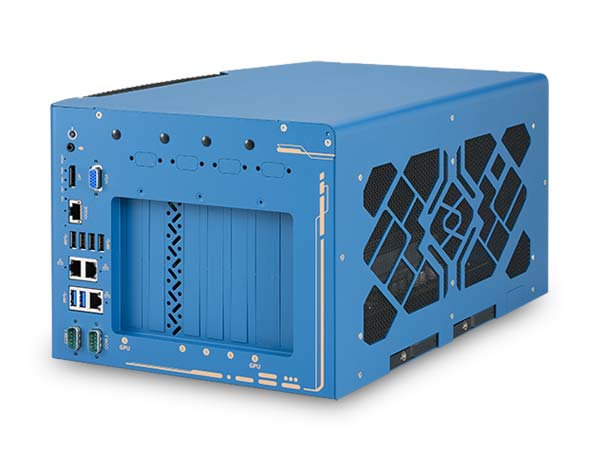
Nuvo-10208GC Series
Edge AI Platform Supporting Dual 350W NVIDIA® RTX GPU Cards, Intel®14th/ 13th /12th-Gen Core™ CPU with Additional PCIe Slots & 2.5G/1G Ethernet Ports
→View product info
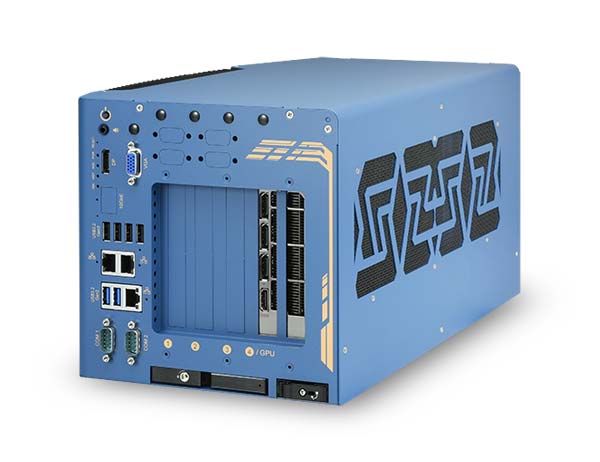
Nuvo-10108GC Series
Industrial Edge AI Computer Supporting Single 350W NVIDIA® RTX™ GPU, Intel® 14th/ 13th/ 12th-Gen Core™ Processor with Three Additional PCIe Slots
→View product info
__53190.jpg)
→View product info
→View product info
→View product info
→View product info

Industrial IoT
We help you enable IIoT connectivity for operational efficiency and maximum business profits.
Knowledge Hub

Start your journey with Neteon!
Discover how our solutions can transform your business.
One click is all it takes.


Follow Us



Copyright © 2025 Neteon Technologies, Inc. All rights reserved.