
.jpg)
__53190.jpg)

Solutions

Industries
Solutions

Industries

Automating Cold Chain Logistics

Neteon
January 9, 2026
Case Studies
.png)
The Engineering Challenge: The "Thermal Hammer"
Objective: Deploy a gateway in refrigerated trucks to monitor cargo temp, driver behavior, and vehicle diagnostics in real-time.
The Reality: A hardware graveyard. The fleet's initial deployments were failing at an unacceptable rate due to two specific environmental factors that standard industrial PCs (IPCs) couldn't handle:
1. The Condensation Killer
Cold chain vehicles are torture chambers for electronics. A truck interior chills to -20°C during transport, then rapidly heats to 35°C+ with high humidity when doors open at a loading dock.
The Failure: This rapid thermal cycling caused condensation to form on internal PCBs of standard vented units, leading to immediate short circuits and corrosion over time.
2. The "Dirty Power" Grid
Commercial trucks have notoriously unstable power buses.
The Failure: Activating the hydraulic lift gate or cycling the refrigeration compressor sent massive transient spikes and voltage sags through the 12V/24V line. This caused the telematics units to reboot randomly or corrupt their file systems due to sudden power loss.
The Solution Architecture
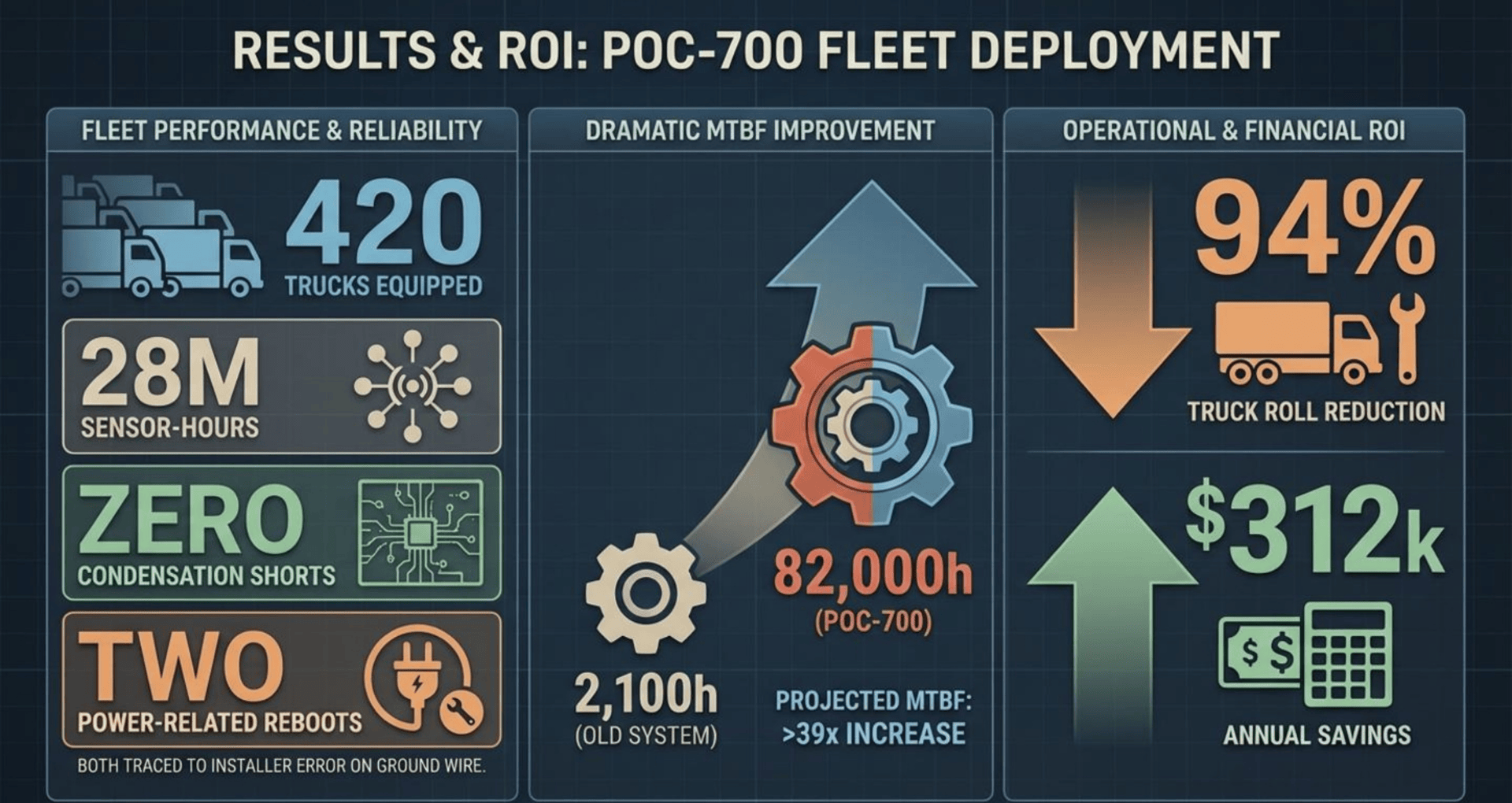
The engineering team switched to the Neousys POC Series (specifically the POC-700 class). This wasn't just a spec upgrade; it was a mechanical fix.
- Fixing the Thermal Failure:The POC unit replaced active cooling with a sealed, fanless aluminum chassis.
- Result: By eliminating air vents, moist air no longer circulated over the PCB components. The unit's wide-temperature rating (-25°C to 70°C) meant it could sit soaked in a frozen bulkhead and function without throttling or shorting when the temperature spiked.
- Fixing the Power Failure:Instead of relying on external power conditioners, the team utilized the POC's built-in Intelligent Ignition Control.
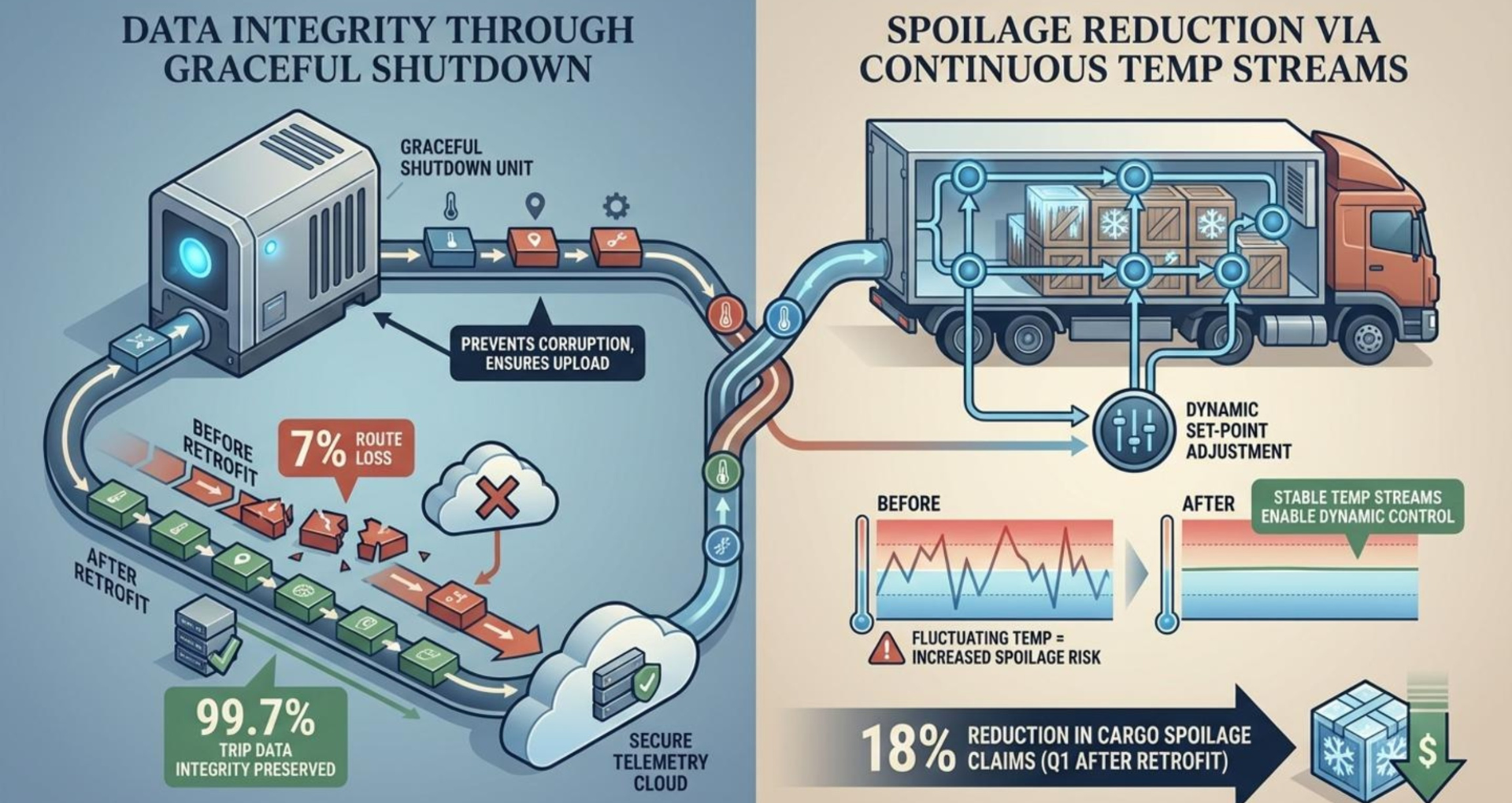
- Result: The integrated MCU acts as a gatekeeper. It ignores voltage sags during engine cranking (preventing reboots) and keeps the unit powered for a programmable delay after the engine cuts off. This ensures data is fully uploaded via 4G/5G before the system performs a graceful shutdown—saving the OS from corruption.
Technical Snapshot
Implementation Checklist: The "Go/No-Go" Assessment
Before retrofitting your fleet with the Neousys POC Series, evaluate these engineering constraints.

Industrial IoT
We help you enable IIoT connectivity for operational efficiency and maximum business profits.
Knowledge Hub

Start your journey with Neteon!
Discover how our solutions can transform your business.
One click is all it takes.


Follow Us



Copyright © 2025 Neteon Technologies, Inc. All rights reserved.