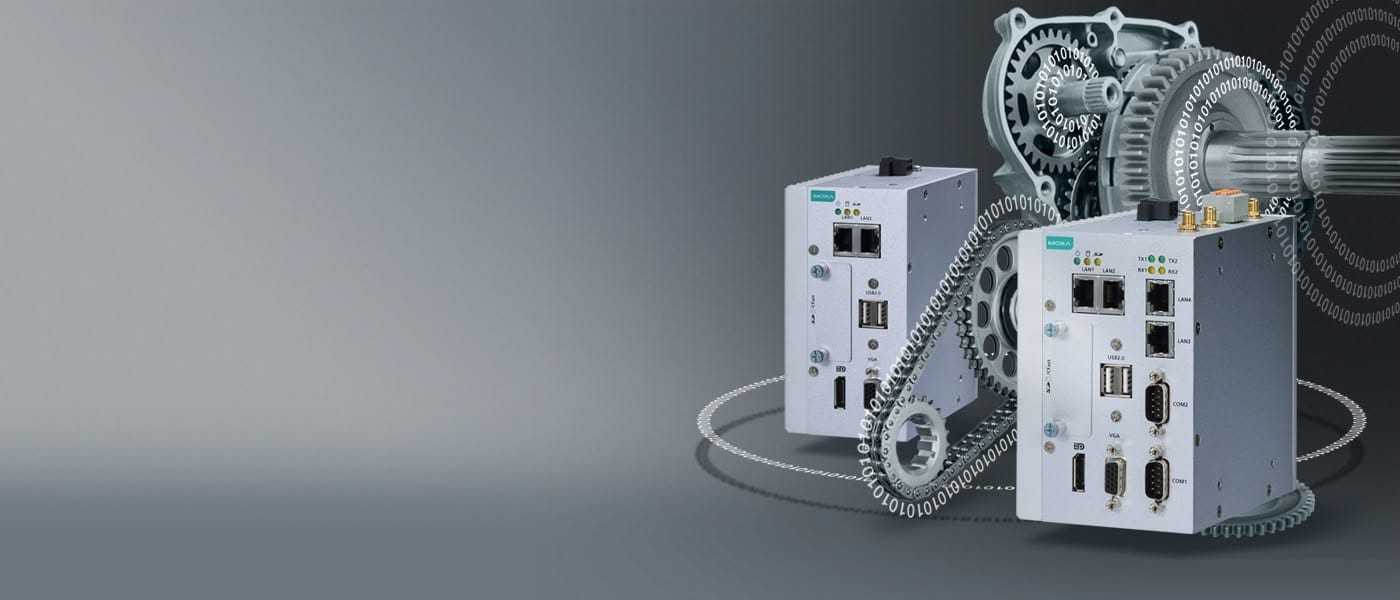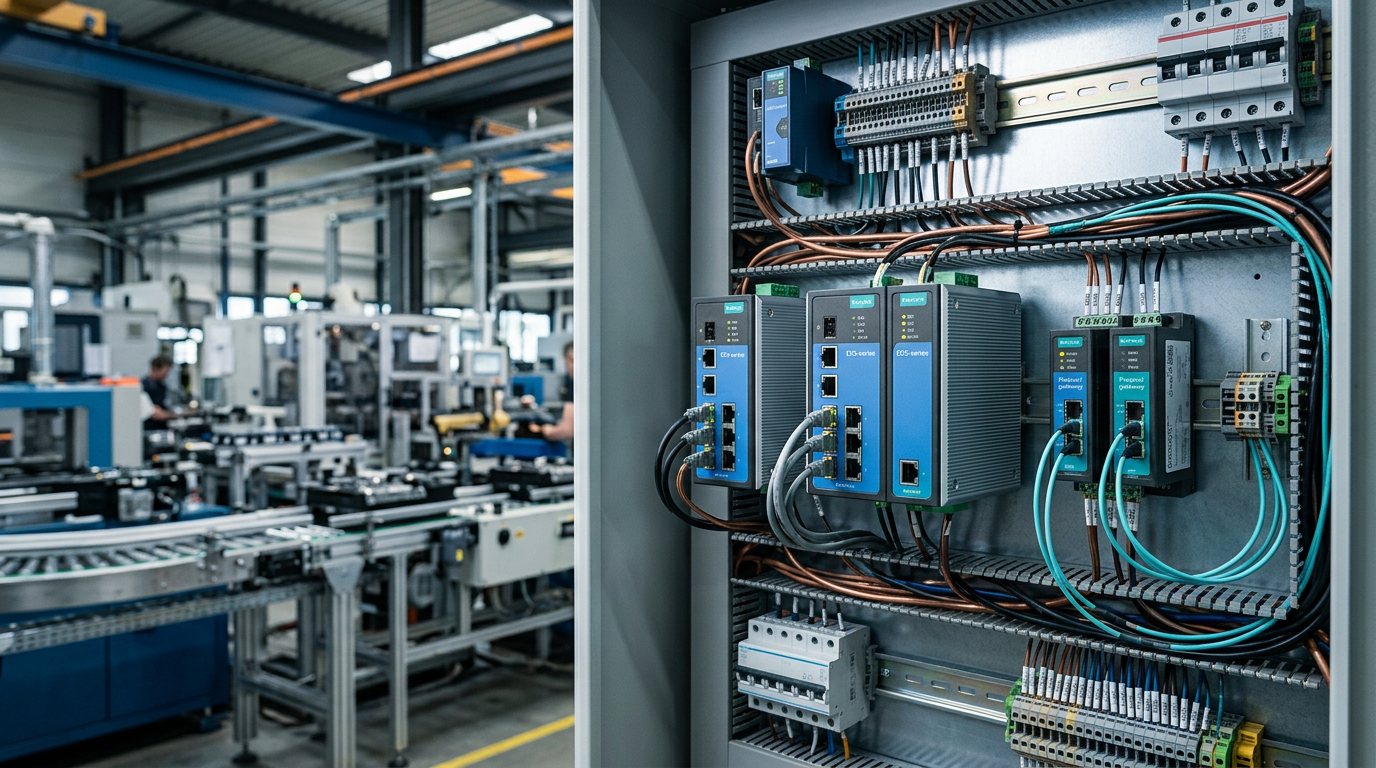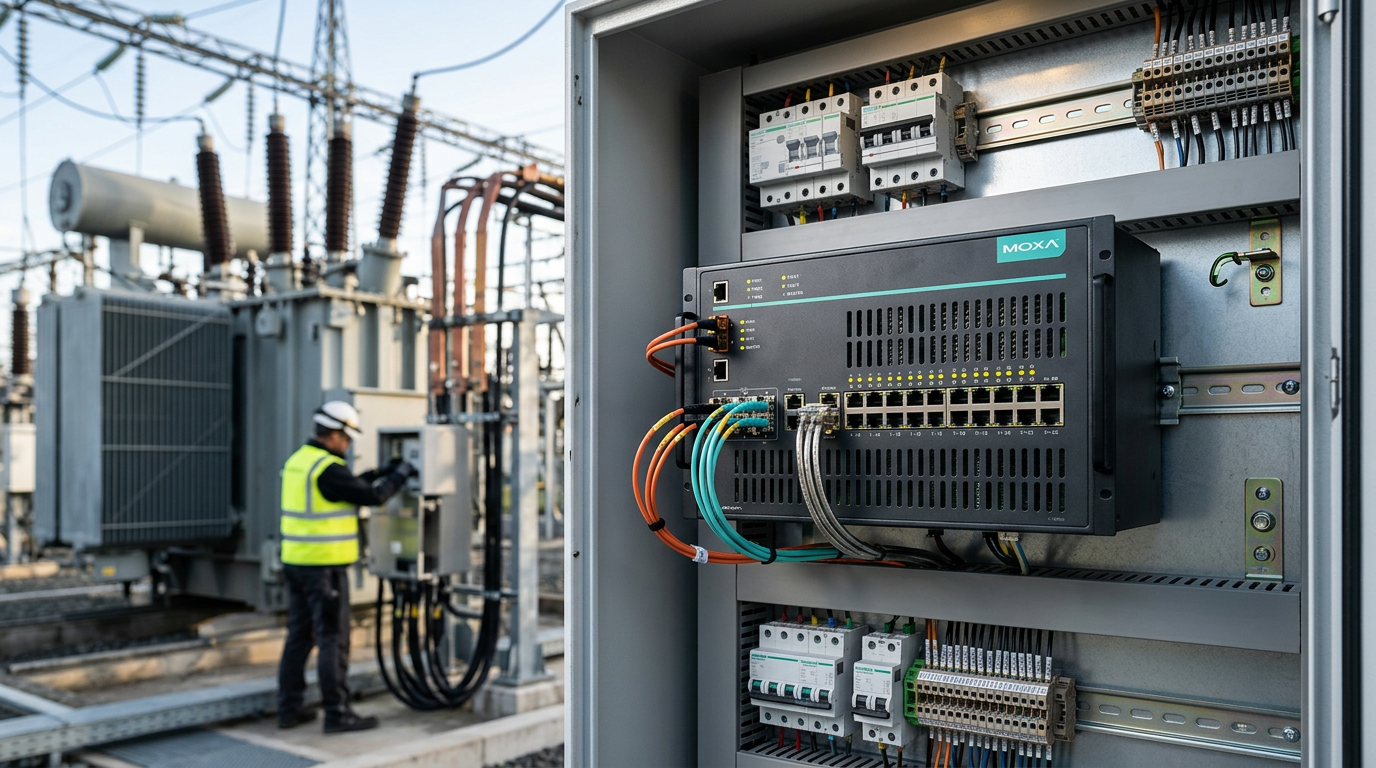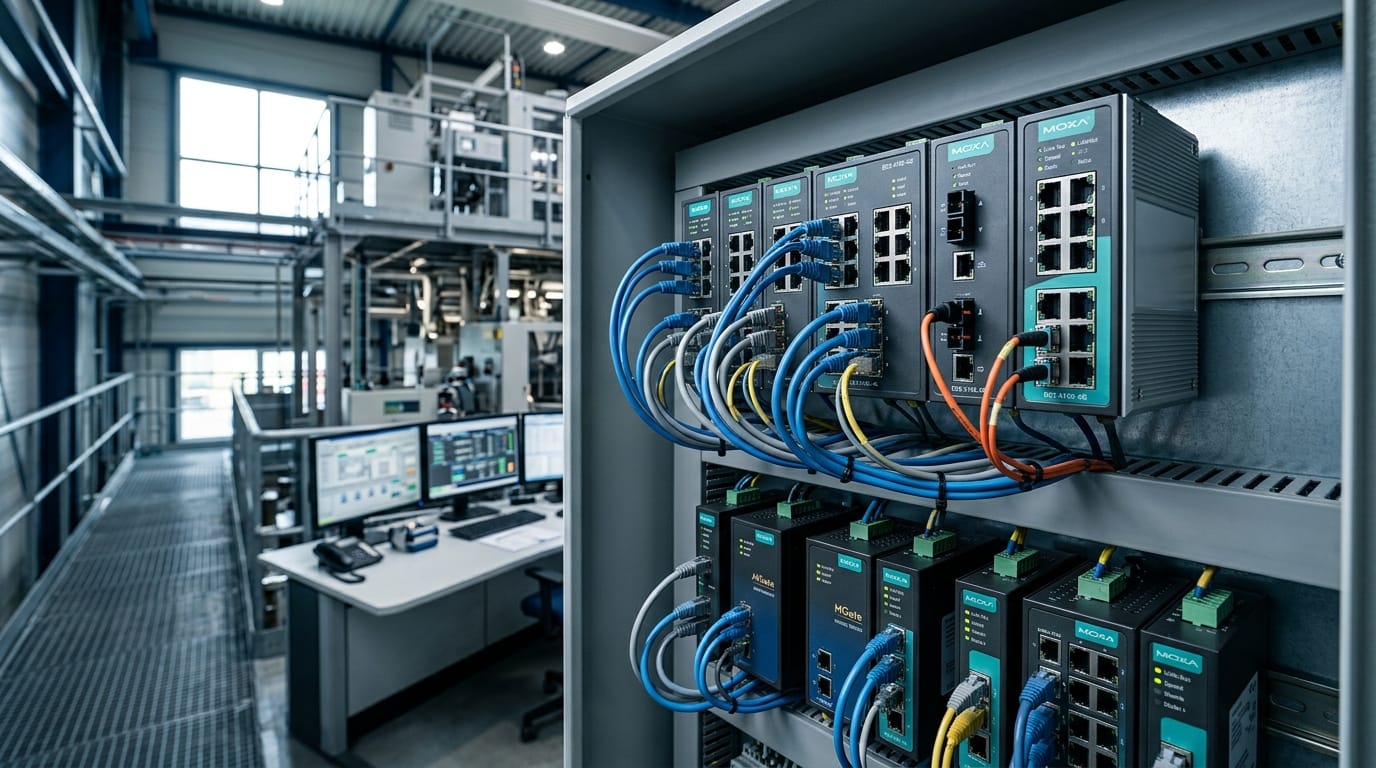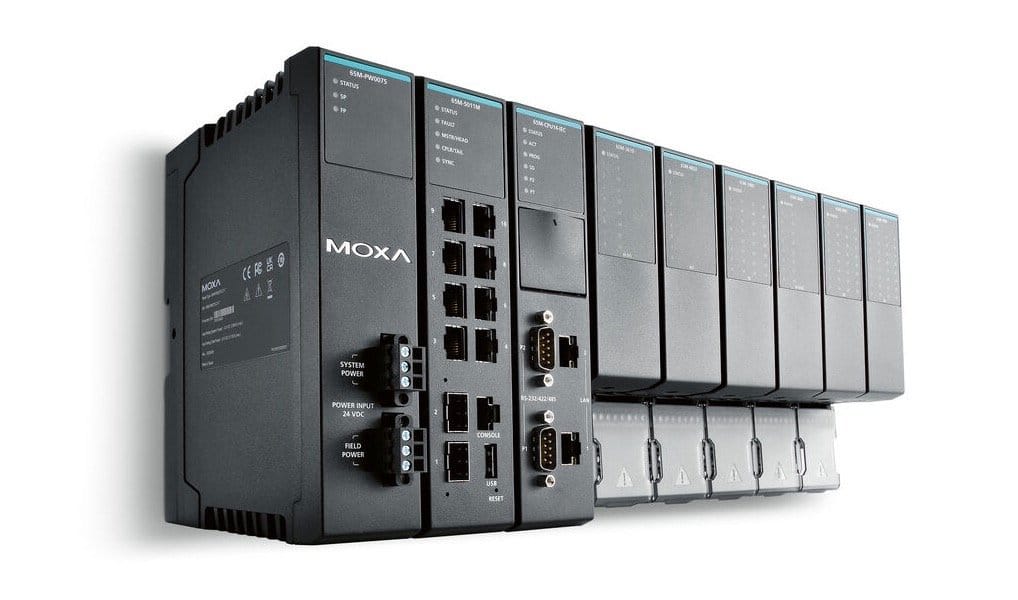
Moxa ioPAC 6500 Series picked up the Red Dot Award: Product Design 2025 in the Industrial Design and Robotics category, the company announced on April 22, 2026 from its Taipei headquarters. This is Moxa's third Red Dot in seven years. The SDS-3008 smart Ethernet switch took one in 2018, the BXP/DRP/RKP industrial PCs followed in 2024, and now the next-generation RTU. What's different this time is what the jury rewarded. The citation didn't focus on specs or certifications. It focused on assembly: tool-free, mistake-proof, hot-swappable. An engineer can reconfigure the controller in the field in minutes. For a 35-year-old industrial communications company connecting more than 118 million devices across 87 countries, that's a noteworthy strategic shift.
The 2025 Industrial Design Battlefield
The Red Dot Award is run by Design Zentrum Nordrhein-Westfalen in Essen, Germany. It's been around since 1955. The 2025 product design winners were announced April 23, 2025, with 235 winners across the Industrial Design and Robotics category. Honeywell, Delta Electronics, Moxa Inc., OPEX, and KUKA all made the list. KUKA took Best of the Best for its KR FORTEC ultra PA palletizing robot.
The Industrial Equipment, Machinery and Automation subcategory has gotten progressively more competitive. The reason is structural: human-factors engineering, long the domain of consumer product designers, is being forced into industrial product categories that historically only cared about MTBF figures and IP ratings. Procurement teams are starting to weight usability the way they used to weight uptime.
Moxa's ioPAC 6500 Series sits inside what the company has classified as the Intelligent Integrated Node (IIN) product line. Moxa's own framing for the design DNA is "adaptive simplicity." Adaptive maps to the modular hardware. Simplicity maps to the tool-free assembly. The Red Dot jury's verbatim citation: "The Moxa ioPAC 6500 Series convinces with its clean, user-friendly construction and wide adaptability to individual requirements." That's user-experience language. You don't see it often in industrial automation award copy.
From Stacked Boxes to Integrated Nodes: The Design Logic
The reason this product won an industrial design award becomes obvious once you understand what it's replacing.
The Real World of Industrial RTU Cabinets
Walk into a control cabinet at an oil and gas wellhead, a water booster station, a substation, or an offshore platform, and you'll typically find five or six discrete devices stacked together: a PLC, separate I/O modules, a communications gateway, an edge compute box, a UPS interface card, a cellular or radio modem. Each comes from a different vendor. Each has its own configuration interface, its own firmware update process, its own diagnostic logic.
The architecture works fine on day one. The problems show up five years in, when something fails. A field engineer has to bring vendor-specific manuals, the right screwdrivers, the right cable adapters, and probably needs to power down the entire cabinet to do the swap. In the Saudi desert or on a North Sea platform, every hour of downtime translates directly into lost revenue.
The IIN Story: Aramco and Moxa, Co-Developed
The Intelligent Integrated Node technology underneath the ioPAC 6500 isn't pure Moxa R&D. On July 11, 2023, Moxa and Saudi Aramco Technologies Company signed a worldwide commercialization agreement to co-develop and bring IIN to market. The technology was invented by Aramco to solve Aramco's own field operations pain, and developed jointly with Moxa for global deployment.
The partnership logic makes sense once you look at the asymmetry. Aramco operates one of the world's largest asset bases in oil and gas. Their internal engineering teams had been frustrated by the multi-vendor stack problem for years. Aramco can build prototypes; what they couldn't easily do is global commercialization across verticals like power, utilities, water, renewables, and transportation. Moxa brings 35 years of industrial networking, distribution to 87+ countries, and an installed base north of 118 million devices.
The IIN concept already had industry credentials before Red Dot. It won the 2018 Custodian of the Two Holy Mosques Prize for Inventors in Saudi Arabia and the 2020 ISA Excellence-in-Innovation Award. Red Dot 2025 is the first international recognition specifically for the design and user-experience dimension of the technology, not just the engineering innovation.
Modular Topology: An RTU Built Like Lego
The ioPAC 6500 breaks the traditional sealed-chassis RTU into seven module classes:
| Module Class | Function | Deployment Slots |
|---|---|---|
| Backplane modules | Power and signal distribution | Control unit and expansion units, 1–2 slots |
| Power modules | Industrial-grade power with redundancy | Multiple per unit |
| CPU modules | Arm Cortex-A53 quad-core, Linux-based | 1 per control unit (1/2 slots) |
| Communication modules | Built-in Layer-2 managed switch | 1 per control unit (1/2 slots) |
| I/O modules | Analog input, DI/DO, HART, etc. | 2 per unit (2/4 slots) |
| Expansion modules | Connect to expansion units | 1 per unit (1/2 slots) |
| Terminal-block modules | Field wiring interface | Pairs with I/O modules |
The system is built around one Control Unit plus up to four Expansion Units. The same platform can scale from a small water-monitoring station running a single unit to a large gas processing facility running five chained units. Traditional approaches require buying a different SKU for each application. The IIN approach requires only a different module combination from the same parts catalog.
Tool-Free, Mistake-Proof: What the Red Dot Jury Actually Cared About
The jury called out "mistake-proof, tool-free assembly" specifically. That phrase sounds simple. Making it work in industrial environments is hard.
Module-to-module electrical connection, mechanical locking, and signal isolation traditionally require screws and specialized tools. The ioPAC 6500 replaces those with hot-swappable spring clips and rail-guided connectors. An engineer pushes a module onto the backplane by hand, hears a click, and the connection is complete. A misaligned module physically cannot be inserted in the wrong slot. That's the mistake-proofing. It prevents field installation errors when the engineer is working in low light, wearing gloves, or under time pressure.
What's worth noting: the durability spec didn't get sacrificed. The ioPAC 6500 passes IEC 60068-2-27 shock testing (half-sine, 15g acceleration, 11ms), IEC 60068-2-6 vibration (DIN-rail mounted: 7mm peak-to-peak from 2 to 8.42 Hz, 1g from 8.42 to 150 Hz), UL 61010-1 and UL 61010-2-201 safety certifications. Operating temperature range is -40 to 75°C. The product matches traditional industrial RTUs on the toughness scale and skips ahead on the experience scale.
The 6C Framework: Why an RTU Is No Longer Just an RTU
Moxa frames the ioPAC 6500's capabilities as "6C": Control, Communication, Computing, Connectivity, Cloud, Cybersecurity. That framework reveals an industry shift: the pure RTU category has effectively dissolved. Customers don't want a dumb signal-relay anymore. They want an integrated edge node that can pre-process data locally, run IEC 61131-3 control logic, communicate bidirectionally with SCADA and plant information systems, and stream data directly to cloud services.
On the cybersecurity front, ioPAC 6500 ships with secure boot, password-cracking defense, intrusion detection, and DoS attack defense. This aligns with IEC 62443 industrial control system security expectations. It's the same product strategy that Moxa is running across other product lines: industrial communications gear can no longer be a passive pipe. It has to have its own intelligence and its own defenses.
The financial case is straightforward. Yong Lin, product manager of Moxa's Data Acquisition and Control Business Unit, put it this way at the launch: "By moving away from fixed-hardware limitations, we provide a foundation that evolves with the project. This modularity doesn't just unify and simplify the cabinet layout; it dramatically lowers CAPEX by ensuring you only deploy the hardware you need, while slashing OPEX through easier field upgrades."
In plain terms: on the CAPEX side, traditional procurement requires custom hardware specs per project, while the IIN approach lets you stack modules to actual need and only pay for what you deploy. On the OPEX side, field upgrades don't require swapping entire chassis. An engineer can hot-swap modules in the field. Downtime drops from hours to minutes.
Reliability vs. Usability: The Industrial Design Paradox
Industrial design has long carried an unresolved tension. Making a product durable usually means sealing it up, packing it tight, hitting IP66 or higher. But sealing it tight typically means it's hard to maintain, modular flexibility is low, and the user interface gets sacrificed. The ioPAC 6500's approach to the paradox is worth examining.
Layered Mechanical Design
The chassis uses plastic housing with DIN-rail or rack mount options. That's standard for industrial RTUs. The interesting part isn't the housing material; it's the internal signal isolation and mechanical load-bearing structure that lets hot-swap and protection coexist. Moxa's choice was a passive backplane, with all active circuitry sitting on the swappable modules. Two consequences: the backplane has near-zero failure rate (no active components to fail) and can be designed as a long-life fixed structure; modules can be replaced individually without replacing the entire chassis.
Interface Language Tradeoffs
Industrial equipment HMI design has been dominated by "information density first" thinking for decades. Dashboards crammed with indicator lights, buttons, jumpers, DIP switches. The ioPAC 6500 takes the opposite path: minimize the visual information needed at the device level, push detailed diagnostics and configuration into the IINxpress IDE software utility. That utility integrates IEC 61131-3 programming, configuration, and protocol services in one tool, designed to flatten the engineer learning curve.
The tradeoff maps to an industry reality. Industrial field engineers are getting younger as veteran PLC engineers retire and manufacturing labor tightens. New engineers have less time to learn. Moving complexity from hardware UX to software UX lowers the entry barrier. For Moxa, this also reduces post-sales training cost and indirectly improves customer lifetime value.
Five-Year Warranty and Long-Life Commitment
Moxa offers a 5-year hardware warranty on the ioPAC 6500, plus its standard long-life supply commitment. Warranty length is an underrated design decision in industrial B2B markets. It directly affects the calculation logic system integrators use when bidding projects. A 5-year warranty can shift the entire "equipment replacement budget" line item down on a TCO spreadsheet.
What Red Dot Means for Moxa's Brand Strategy
This is the part of the story worth taking seriously. What does an industrial communications vendor winning a design award actually signal?
The Design Premium in Industrial B2B
Industrial equipment procurement has historically been spec-sheet-driven. Price, MTBF, certification list, warranty period, lead time. Those five variables account for roughly 70% of the procurement decision weight. Design, brand, and user experience, which dominate consumer product markets, have long been treated as nice-to-haves in industrial procurement.
That's changing. Asset owners (oil and gas operators, power utilities, water companies) started rolling out digital transformation programs in the early 2020s. OT/IT integration, edge computing, SCADA modernization projects are coming online at scale. The decision-making committees on these projects look different from the old days. The lineup has shifted from "procurement plus engineering" to "procurement plus engineering plus IT architect plus digital transformation office." The latter two roles bring procurement logic that's closer to consumer software markets. They care about a vendor's design maturity, ecosystem completeness, software update cadence.
That's where Red Dot does real work. For non-engineering members of a procurement committee, "this product won a Red Dot" is a quality signal that doesn't require technical interpretation. It's third-party validation of design maturity. That's the strategic thinking behind Moxa's three Red Dot bets in seven years (2018, 2024, 2025).
Two Parallel Brand Tracks: Certifications and Design Awards
Looking at Moxa's brand strategy over the past decade, you can see two parallel tracks. One is the industrial certification track: UL, ATEX, IECEx, KCC, CE, all directly mapped to "compliance" line items on procurement checklists. The other is the design award track: Red Dot, iF, Good Design Award, mapped to brand trust, which is fuzzier but increasingly important.
Design awards don't show up on a spec sheet. But they do show up on the first slide of a Moxa sales rep's deck, in the "vendor background" section of a customer's internal evaluation report, and in word-of-mouth conversations between engineers. The brand work happens in those margins.
Implications for the Broader Industrial Vendor Market
Moxa is one of the few Taiwan-headquartered industrial vendors that consistently wins international industrial design awards. The path is replicable: spec is no longer the only battleground, and investment in user-experience design can be reflected in brand premium pricing, and that premium has become quantifiable in B2B industrial markets.
US industrial vendors should pay attention. The competitive set in industrial communications and edge connectivity is going global fast, and the differentiation surface is shifting from features to experience. Companies still treating industrial design as cosmetic are leaving margin on the table.
Three Signals Worth Tracking Over the Next 24 Months
After the ioPAC 6500 launch, three signals are worth watching:
First, IIN architecture penetration outside oil and gas. Moxa is currently targeting oil and gas, water and wastewater, and critical utilities. If IIN extends successfully into renewables, rail, and smart grid, that suggests "integrated node" is becoming a new product category that could displace traditional RTUs as an industry standard.
Second, competitor response timing. Traditional RTU heavyweights (ABB, Schneider Electric, Honeywell, Emerson) all have next-generation product roadmaps in this category. If they ship modular, tool-free designs in the next 12 to 18 months, what started as a Moxa design experiment becomes an industry-wide design shift.
Third, the software ecosystem on top of the IIN platform. The real value from hardware modularity comes from an open software layer. If Moxa opens IINxpress IDE to a third-party application marketplace, or lets customers develop edge compute applications that run on IIN, the product graduates from "an RTU" to "an industrial edge platform." This direction overlaps directly with the broader Industry 4.0 vision around AI agents and protocol orchestration at the edge.
Frequently Asked Questions
What is an RTU and how is it different from a PLC?
An RTU (Remote Terminal Unit) is a field device used to collect sensor signals, perform local control, and send data back to a central SCADA system. Compared to a PLC (Programmable Logic Controller), an RTU is typically deployed in remote or distributed sites, emphasizing low power consumption and communication. PLCs are usually inside factory floors, optimized for high-speed control logic. The Moxa ioPAC 6500 is a next-generation RTU that integrates capabilities of traditional RTUs, PLCs, and edge compute gateways.
How is the Moxa ioPAC 6500 different from earlier ioPAC models?
The biggest change is hardware architecture. Earlier ioPAC models used fixed configurations, with each SKU corresponding to a specific I/O and interface combination. The ioPAC 6500 is fully modular, with one control unit and up to four expansion units. Users assemble seven module classes (backplane, power, CPU, communications, I/O, expansion, terminal-block) using tool-free hot-swap installation. The platform also runs Linux on an Arm Cortex-A53 quad-core CPU, with significantly higher compute capability.
What level of design recognition is the Red Dot Award: Product Design?
Red Dot is administered by Design Zentrum Nordrhein-Westfalen in Germany, founded in 1955, and is one of the most influential design awards globally. Each year, more than 6,000 entries are evaluated by 40+ international jurors on innovation, functionality, ergonomics, longevity, and ecological compatibility. Awards are tiered as Best of the Best, Red Dot Winner, and Honourable Mention. Moxa ioPAC 6500 received Red Dot Winner status in the Product Design category.
Which industries does the Moxa ioPAC 6500 target?
Asset-intensive operational facilities, including oil and gas extraction and transmission, water treatment and distribution, critical utilities, substation automation, renewable energy generation, rail infrastructure, and offshore platforms. The common pattern is distributed sites, harsh environments, long equipment lifecycles, and high downtime cost. The IIN modular advantage is most visible in projects with limited field engineering resources or rapid deployment requirements.
Authoritative References
- Red Dot Award: Product Design 2025 (Industrial Design Winners). Official Red Dot site.
- Moxa Press Release: ioPAC 6500 Wins Red Dot 2025. Official Moxa announcement, April 22, 2026.
- Moxa Inc. and Saudi Aramco Technologies Company Sign Worldwide Commercialization Agreement for Intelligent Integrated Node Solution (PR Newswire, July 11, 2023). IIN partnership background.
- Manufacturing AUTOMATION on the 2025 Red Dot Industrial Design Winners. 2025 industrial category overview.
- Moxa ioPAC 6500 Series Product Page. Product specs and technical documentation.